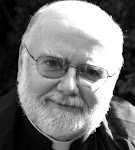
Please find below a statement by the Bishop of Tonbridge regarding the crisis in Israel/Palestine. A copy of this is also available on the diocesan website at www.rochester.anglican.org
TO THE CLERGY AND THE PEOPLE OF THE DIOCESE OF ROCHESTER
Statement on the crisis in Israel/Palestine by the Bishop of Tonbridge
A few short weeks ago I visited the Holy Land with a group from the Diocese of Rochester. We were there to meet individuals and organisations working for peace and reconciliation in that place, including Bishop Suheil Dawani, the Anglican Bishop in Jerusalem.
Last week, on Christmas Eve, the Bishop preached in the Church of the Holy Nativity in Bethlehem. “The world waits in eager expectation for people of goodwill, courage and vision to set aside personal agendas, to encourage a change of heart, to empower all people of faith to tear down the walls of cruelty, fear and hatred”, he said, in the presence of the Palestinian President Mahmoud Abbas and Prime Minister Salam Fayaad. He continued, “We cannot diminish or escape from the challenges before us which are very real and confront our people. Peace, a just durable peace, is rooted in the reconciling love of God for all the people of this land”.
In Gaza, just two days after the celebration of the birth of Jesus Christ, the people there were subjected to heavy bombardment by Israeli armed forces. As I write, the military action continues. The roots of the conflict in the Holy Land are deep and complex and while recognising the suffering of all parties involved, Palestinians in the West Bank and Gaza are paying a particularly high price. The immediate cause of the present crisis is that, for many months, rockets fired from Gaza have brought terror and disruption to the lives of many living in Israel. This is unacceptable. Similarly, the reaction against Gaza, which has claimed many innocent lives and injured many hundreds of others, is disproportionate and equally unacceptable.
I am reminded of an African saying that when the elephants fight, it is the grass which gets trampled and this has been the case in the present crisis. As well as killing and injuring many innocent civilians in Gaza, the most heavily populated area in the world, it has also seen a number of innocent civilians killed and injured in Israel.
At this time of Christmas and Epiphany, Christians throughout the world are looking to the Holy Land in a spirit of joy and thanksgiving for the events of 2000 years ago: the realities unfolding today are anything but a cause for joy and thanksgiving. Commentators reflect that the seriousness of the situation should not be underestimated. As Christians we should pray both urgently and fervently.
May I ask, then, for you to pray that the spirit of peace and justice may influence those who make decisions about war and peace in the Holy Land. I also encourage you to pray for the casualties of war and for those who grieve for loved ones, as well as for those working hard to bring humanitarian and medical aid to those suffering in the war zone. Will you remember especially the Al Ahli Hospital in Gaza City, an Anglican hospital which has been serving the people of the area for over a century, as it struggles to bring healing and peace to all who come to its doors. Finally, do pray for all those in the Holy Land working for peace and reconciliation, that they may have the strength to continue their work in the middle of such daunting challenges.
May there be an immediate cease-fire so that the voices and actions of ‘people of goodwill, courage and vision’ prevail.
+Brian Tonbridge
1 January 2009
Friday, 2 January 2009
Wednesday, 3 December 2008
The Light is Coming - The First Sunday of Advent
The central theme of Advent and especially to this first Sunday is a firm declaration to “cast away the works of darkness and put on the armour of light,” for as we read in Mark, “the Son of Man” is coming with “great power and glory.”
Let us be clear: the God depicted here is not a serene and docile deity. Isaiah calls upon a potent God who would “tear open the heavens and come down, so that the mountains would quake.” And our actions in response to this coming should be no less robust.
At first look, we welcome such a dominating and mighty God to respond to our needs and concerns. Yet we who believe in a divine being from whom all things flow, also know that such a transcendent force can “bend history.” Put bluntly, if we are not prepared for God’s response to our prayers for the Creator’s presence, the appearance of the divine can be unsettling and threatening to our very lives and our very order. Such a forceful manifestation can bring about significant change. Our desire for the Lord’s coming brings with it risk as well as reward.
There is a little-known fairy tale by the Brothers Grimm entitled “Der Mond,” or in English, “The Moon.” It is a short tale that was adapted by the German composer Carl Orff into an opera. It involves four young rowdy misfits from a land where there is no light – no sun in the day and no moon or stars at night. These are people who “walk in darkness.”
These lads travel to another land where they find the moon hanging on a tree. They steal the moon and bring it back to their land where they charge people money for their use of the moonlight. Eventually, as happens to all of us, they grow old and die. As each one dies, one quarter of the moon is cut away and buried with one of its owners until there is no more light. In the opera, Petrus, “who rules the sky,” descends to the dead and retrieves the four pieces of the moon and hangs it in the sky for the benefit of all.
Yes, this tale is a retelling of the age-old belief that God brings light to the people who, in the words of the prophet, “walk in darkness.” Yes, this is about the season of Advent, which alludes to an arrival, a beginning. It is best understood as a dawning, as in the early morn of a new day. Yes, like the four misfits, this is a time when we come upon and marvel in a new Light. Yes, like the four young men, we can hoard and hide the light. And yes, we, like Petrus in Carl Orff’s opera, are called to share this light with the world.
There is an intrinsic understanding that, no matter what, we welcome the coming of the Lord and that it can happen at any time. Indeed, during the course of our lives, God appears and reappears. At times, we are that very light to the world in what we say and what we do. When we are called to serve and share a warm and friendly smile, we are restored; God’s face shines through our own countenance, and we are saved.
The expectation is that we are God’s hands, God’s light on this earth. God calls us to shine a light, to be witnesses to his mercy and love; not only through our words, but also in our works. We are called to feed the hungry, clothe the naked, and visit the prisoner. When we serve those in need – like the student who needs tutoring, the lonely homebound person who needs company, those who have lost their homes and possessions because of a hurricane, earthquake, flooding or fire, or those who mourn – we, as in the words of the spiritual, “rise and shine.” We are witnesses to the Lord’s coming – symbolically on Christmas Day, and for real today and all the tomorrows of our lives.
Those who first sang the words of the spiritual, shackled by the chains of slavery, looked with hope to a new day – to a brighter day when the darkness of this inhumane treatment would give way to the light of freedom. Indeed, in response to their oppression, they sang these words with faith and hope. And in this age when we encounter personal and communal challenges that test our mettle, we would do well to join these forebearers in our common history by not cursing the darkness but always seeking the light. Yes, this is the meaning of Advent.
Jesus says in the gospel reading, “Beware, keep alert; for you do not know when the time will come. Therefore, keep awake – for you do not know when the master of the house will come, in the evening, or at midnight, or at cockcrow, or at dawn, or else he may find you asleep when he comes suddenly. And what I say to you, I say to all: Keep awake.”
Amen.

Subscribe to:
Posts (Atom)